Steve Turtell
PETER HUJAR IN NEW ORLEANS
Rick said, “Hi Peter.” Peter looked down and nodded slightly, waving his hand like an old man, or maybe more like a child instructed to say “hi” or “bye.” He obviously needed Charles’s help to get out the door. As he walked past me I was about to say “hello”. But I saw from the look in his face that he didn’t know who I was. His reply to Rick had been automatic, polite, not a greeting to someone he knew. Charles and Vince led Peter out. I watched them through the window for a moment, staring at a vision which had become so ordinary in those years that it no longer had the power to shock: two relatively young men helping a third to walk.
It was a vision of Peter, which, looking back, I could never have imagined; if such a scenario had been predicted to me at any time in the first years I knew him, I would have reversed the roles. I could only have imagined Peter, strong, independent, resilient Peter, sadly watching me decline into death.
I was disturbed that he did not recognize me. I had known him for nearly half my life by then. We’d met in the summer of 1971, when I was twenty-one and he was thirty-seven, and I was one of his best friends (a coveted, contested role) for the next seven years. But our friendship had come to an end in 1980 — in the wake of a disastrous trip we’d taken to Mardi Gras. We made a few attempts to repair the damage, but never could. A once central friendship for both of us limped along until finally we stopped making any effort to see each other, although we could never completely avoid accidental encounters at The Bar on 4th Street and elsewhere.
Before running into him at Veselka that night, I’d last seen him at La Mama, at the opening of a theater piece by a mutual friend, John Heys, directed by the photographer Allen Frame. I’d heard that Peter was sick and getting sicker, but he looked healthy. When I asked how he was, he kicked the air next to my shin vigorously several times to demonstrate how well he felt.
“I’m still kicking” he said.
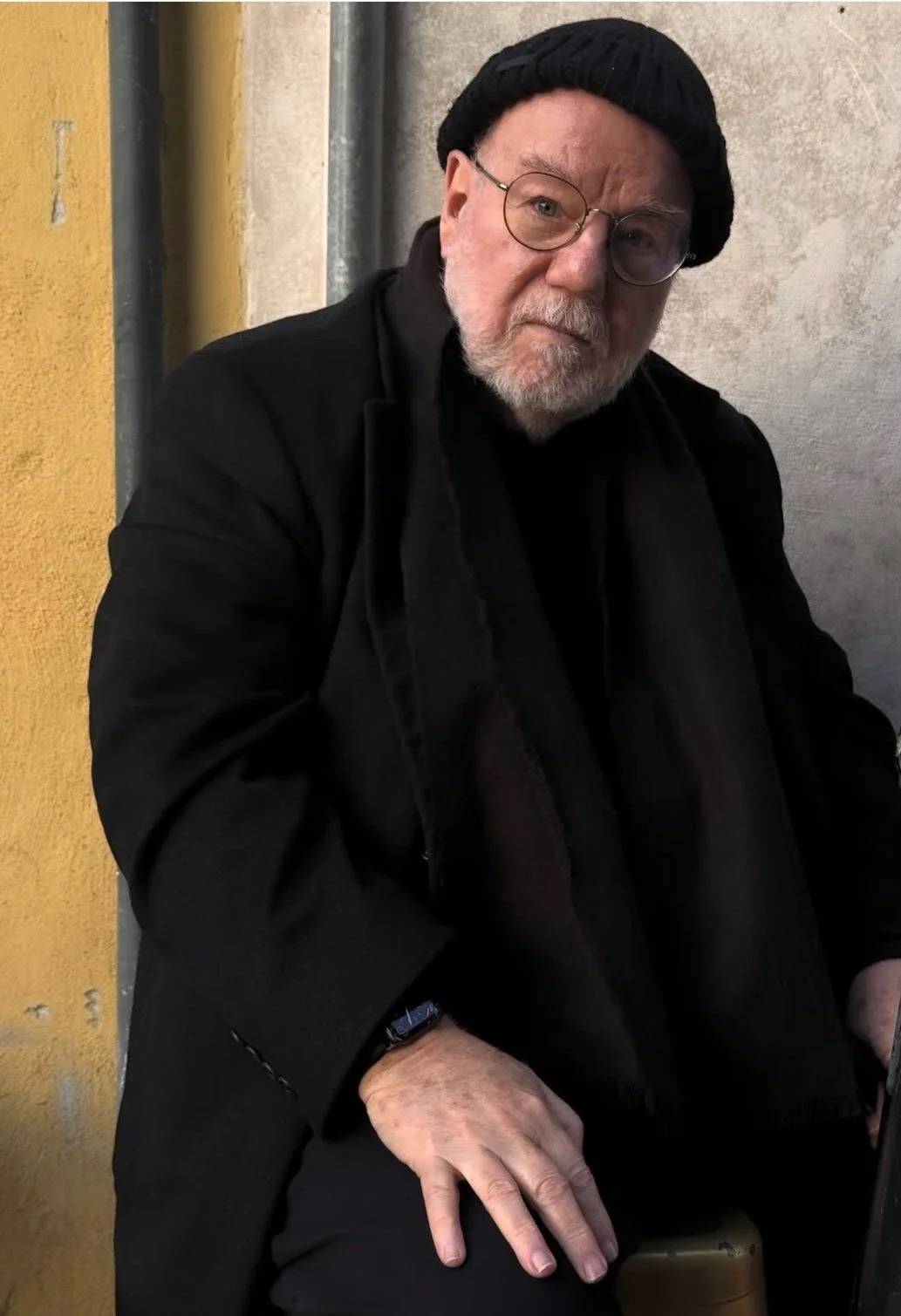
Born and raised in New York, Steve Turtell is a poet and writer whose 2012 collection Heroes and Householders was praised by critic Marjorie Perloff for its “subtle and charming poems.” As director of public programs at the Museum of the City of New York, the South Street Seaport Museum, and the New-York Historical Society, he oversaw the public programming for eighteen photography exhibitions — a role that underscored his deep engagement with the medium and its histories.